Every grip sock promises “more grip”. Some deliver it for a few weeks; others keep it for a few months. When you compare them, these seven points tell you which is which.
If you are new to grip socks, start with what grip socks are and how they work.
1. Where the grip pads are
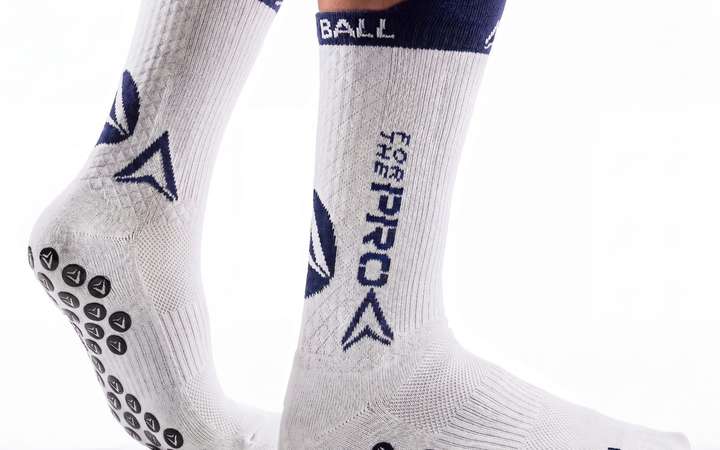
The pads should sit where your foot presses on the insole: under the ball of the foot, along the outside edge and under the heel. Those are the points that slide when you push off, cut and stop.
Look at the layout, not just the number of pads. A pattern that covers the pressure points beats a sock covered in pads everywhere. Pads are not needed where the foot does not press: there they only add weight and thickness, with no real benefit.
2. Pad material and how it is attached
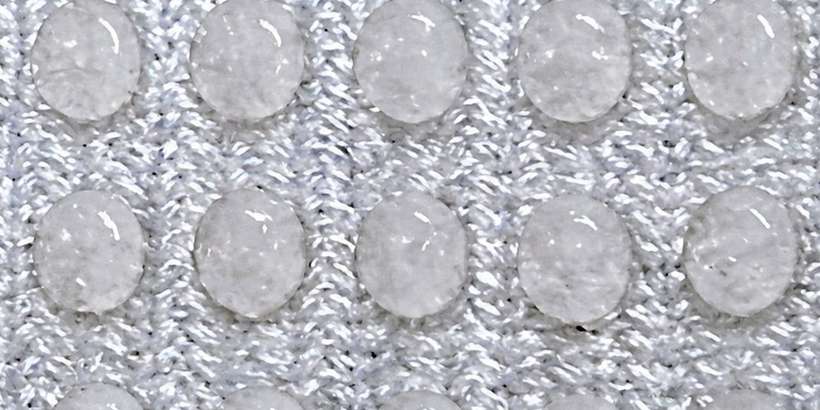
Silicone and rubber pads both work. What matters is that they are bonded well enough to survive washing and hundreds of hard stops. Run a fingernail along the edge of a pad: if it lifts easily in the shop, it will peel after a few weeks.
3. Internal padding and internal grip
Some football socks have extra features on the inside, such as an internal grip that helps the sock hold its position at the ankle. FOR THE PRO socks have a distinctive internal system: many small rubber grip points that softly but firmly keep the sock stable in position.
4. Fit and compression
A grip sock should fit close to the foot without folds. Loose fabric is exactly what grip socks are meant to remove. Good socks shape the fabric to the foot (a defined heel, support around the arch) instead of being a straight tube.
Light compression helps the sock stay in place. Too much makes your feet tired and cold. If it leaves deep marks, it is too tight.
5. Thickness and cushioning
There is a trade-off:
| Area | Thinner | Thicker |
|---|---|---|
| Ball-contact zones (instep, top of the foot) | Better feel for the ball | Duller touch |
| Impact zones (heel, ball of the foot) | Less protection | More comfort over 90 minutes |
| Overall | Cooler, more precise | Warmer, softer |
The best socks are not uniformly thick or thin. They use thin zones where you touch the ball and cushioning where you land.
6. Breathability and moisture
Wet feet slide more and blister faster. Look for technical fibres that move sweat away from the skin and mesh or ventilated areas on top of the foot. Cotton holds water and gets heavy; it is the wrong material for a grip sock. If blisters are your problem, read how to stop blisters from football boots.
7. Durability and price per pair
A good grip sock keeps its grip, its shape and its colour through a whole season of washing. To compare prices fairly, work out the cost per pair over a season, including how often you will need to replace them. Buying several pairs at once usually lowers the price per pair, and helps if you are buying for a whole team: see grip socks for teams.
Quick checklist
- Pads under the ball of the foot, the outer edge and the heel
- Pads firmly bonded, no lifting edges
- Internal grip points
- Close fit with a shaped heel, no folds
- Thin where you touch the ball, cushioned where you land
- Breathable technical fibres, no cotton
- A price per pair that makes sense over a whole season
How FOR THE PRO grip socks compare
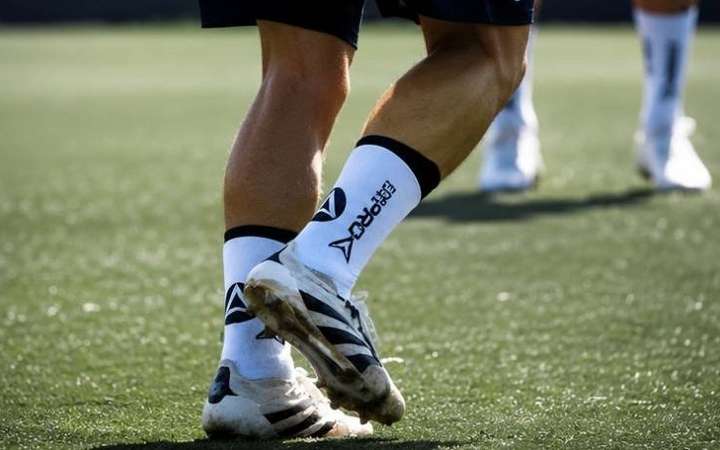
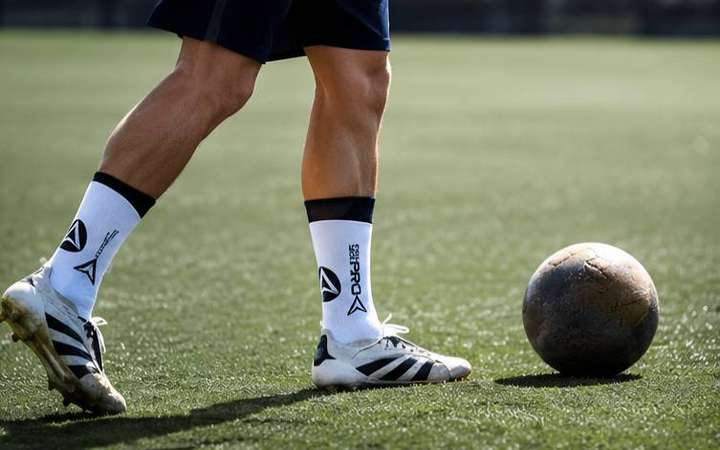
We built FOR THE PRO around these seven points:
- Grip: grip zones on the sole, plus an internal grip system at the ankle.
- Fit: an anatomical fit with compression, for a locked-in feel without loose fabric.
- Thickness: thin sensitivity zones at the ball-contact points, cushioning in the impact zones.
- Friction: low-friction areas around the high-rub spots.
- Fibres: technical fibres for moisture management, breathability and shape retention.
- Price: €29.90 per pair for the football grip socks. -7% from 7 pairs (Season Pack), -12% from 18 pairs (Team Pack), free shipping over €49.90.
There are three designs, V1, V2 and V3, each as football grip socks or as football socks without grip on the sole. See the football grip socks.